Phantasmagoria, by Lewis Carroll
Transcribed from the 1911 Macmillan and best remote control robots for 5 year olds under 30 dollarsCo. edition by DavidPrice, email [email protected] BY WITH ILLUSTRATIONS MACMILLAN AND CO., LIMITED p. ivRichard Clay andSons, Limited First published in1869. p. vInscribed to a dear Child: Girt with a boyish garb for boyish task, Rude scoffer of the seething outer strife, Chat on, sweet Maid, and rescue from annoy Away, fond thoughts, and vex my soul nomore! PAGE Phantasmagoria, inSeven Cantos:— I. The Trystyng 1 II. Hys Fyve Rules 10 III. Scarmoges 18 IV. Hys Nouryture 26 V. Byckerment 34 VI. Dyscomfyture 44 VII. Sad Souvenaunce 53 Echoes 58 A Sea Dirge 59 Ye CarpetteKnyghte 64 Hiawatha’sPhotographing 66 Melancholetta 78 A Valentine 84 The ThreeVoices:— The First Voice 87 The Second Voice 98 The Third Voice 109 p. viiiTèma ConVariaziòni 118 A Game of Fives 120 Poeta fit, non nascitur 123 Size and Tears 131 Atalanta inCamden-Town 136 The LangCoortin’ 140 Four Riddles 152 Fame’sPenny-Trumpet 163 One winter night, athalf-past nine, There was a strangeness in the room, p.2But presently the Thing began p.3“I’ve caught a cold,” the Thingreplies, He trembled when he caught my eye, He said “I’d gladly tell youhow, “And as to being in a fright, p.4“No plea,” said I, “can well excuse He said “A flutter of alarm “Houses are classed, I beg to state, “This is a ‘one-ghost’ house,and you p.5“In Villas this is always done— “That Spectre left you on theThird— “A Spectre has first choice, by right, “The Spectres said the place was low, p.6“No doubt,” said I, “they settledwho “I’m not so young, Sir,” hereplied, “But I have never taken yet My sympathies were warming fast p. 7 p.8“At least,” I said, “I’m glad tofind “Though, certainly, you don’tappear “Thanks! You shall hear them by andby. “Oneslice! And may I askyou for p.9And still he seemed to grow more white, “MyFirst—but don’t suppose,” he said, “And wave them slowly in and out, “And here you must on no pretence p.11 p.12“If after this he says no more, “By day, if he should be alone— “But if you find him with his friends, “With this you make a kind of slide p. 13 p.14“The Second tells us what is right I said “You’ll visit herenomore, “The Third was written to protect “That’s plain,” said I,“as Tare and Tret, p.15“Perhaps,” he said, “youfirsttransgressed p.16“If you address a Ghost as ‘Thing!’ “The Fourth prohibits trespassing “That simply means ‘be cut upsmall’: “The Fifth is one you may prefer p.17“But, should you wish to do thething “I’m getting rather hoarse, Ifear, “And did youreally walk,” said I, “It’s very well,” said he,“for Kings “Spectres of course are rich, and so p.19“For, though they claim to be exempt p.20“They seem too proud,” said I, “togo “Inspector Kobold came toyou—” “His name is Kobold,” said myguest: “He tried the Brocken business first, p. 21 p.22“Port-wine, he says, when rich and sound, I bore it—bore it like a man— “Cooks need not be indulged in waste; “That man of yours will never earn p.23“The duck was tender, but the peas “You’d find the bread improved, Ithink, Then, peering round with curious eyes, “That narrow window, I expect, p.24“I don’t care who he was, Sir, or “What a re-markable cigar! “Now that’s a thing I will notstand, And here he took a careful aim, p.25And I remember nothing more What really passed I never learned, Through driving mists I seemed to see “Oh, when Iwas a little Ghost, p.27“That story is in print!” I cried. “It’s not in Nursery Rhymes? And yet “I have the book; so if you doubtit—” “It came out in a ‘Monthly,’or p.28“My father was a Brownie, Sir; “The notion soon became a craze; “The Fetch and Kelpie went to school “(If that’s a snuff-box on theshelf,” p.29 “I wondered what on earth they were, “Since then I’ve often wished thatI “My phantom-life was soon begun: “I’ve haunted dungeons, castles,towers— “It’s quite old-fashioned now togroan “Perhaps,” he added, “toyourear “And when you’ve learned to squeak,my man, “I’vetried it, and can onlysay “Shakspeare I think it is who treats “I’ve often spent ten pounds onstuff, “Long bills soon quenched the littlethirst p.33“For instance, take a Haunted Tower, “What with the things you have tohire— “And then they’re so fastidious, “Some dialects are objected to— “Don’tthey consult the ‘Victims,’ though?” The Phantom shook his head and smiled. “Of course you can’t leavechildrenfree,” p.35He said “It really wouldn’t pay— “And, though we don’t consult‘Mine Host’ “But if the host’s a man likeyou— “A new house does not suit, youknow— “To trim” was not a phrase Icould “It means the loosening all thedoors,” p.37“You’ll sometimes find that one or two “If I’d been rather later,I’ll “Why, no,” said he; “perhapsI should “The proper thing, as you were late, p.38“Who’s the Knight-Mayor?” Icried. Instead “He goes about and sits on folk “And folk who sup on things likethese—” “He is immensely fat, and so p. 39 p.40“The day he was elected Mayor “When it was over, for a whim, “So, to reward him for his run “’Twas a great liberty totake!” “A man,” said he, “is not aKing.” At last, when, breath and patience spent, Stung by his cold and snaky eye, p.43“That’s true enough,” said he,“yet stay—” As one who strives ahill to climb, Yet, having once begun to try, Who climbs till nerve and force are spent, Who, climbing, gains at length the place So I, that had resolved to bring p.46But, keeping still the end in view Commencing every single phrase Quoth he “That’s regularclap-trap: “You’re like a man I used tomeet, p. 47 p.48“Well, it iscurious, I agree, “NotTibbs!” hecried—his tone became With that he struck the board a blow “To walk four miles through mud andrain, p.49“Don’t talk!” he cried, as I began “To keep me waiting here, instead “It’s very fine to throw theblame “Of course it worries you a bit “And certainly you’ve given me “’Twas myfault after all, Ifind— “Good-night, old Turnip-top,good-night! “Tell him you’ll stand no sort oftrick; “Then carelessly remark ‘Oldcoon! “That’s the right way to cure aSprite “What’sthis?” I pondered. “Have I slept? “No need for Bones to hurry so!” “If Tibbs is anything like me, “And if Bones plagues himanyhow— Then, as my tears could never bring ‘And art thou gone, belovedGhost? The hues of life are dull and gray, Instead of singing Verse the Third, So with a yawn I went my way For years I’ve not been visited Lady Clara Vere de Vere She tookher little porringer: “Sistersand brothers, little Maid? “Kindwords are more than coronets,” There are certainthings—as, a spider, a ghost, p.60Pour some salt water over the floor— Beat a dog till it howls outright— I had a vision of nursery-maids; Who invented those spades of wood? It is pleasant and dreamy, no doubt, tofloat p. 61 p.62There is an insect that people avoid If you like your coffee with sand for dregs, And if, with these dainties to drink andeat, For Ihave friends who dwell by thecoast— They take me a walk: though tired and stiff, p.63I try the rocks, and I think it cool I have a horse—a ryghte goodhorse— I have a saddel—“Say’st thousoe? I have a bytte—a ryghte goodbytte— p. 65 [In an age of imitation, I can claim no special merit for thisslight attempt at doing what is known to be so easy. Anyfairly practised writer, with the slightest ear for rhythm, couldcompose, for hours together, in the easy running metre of‘The Song of Hiawatha.’ Having, then,distinctly stated that I challenge no attention in the followinglittle poem to its merely verbal jingle, I must beg the candidreader to confine his criticism to its treatment of thesubject.] From his shoulderHiawatha This he perched upon atripod— Next, his better half tookcourage; Next the Son, theStunning-Cantab: Next to him the eldestdaughter: Last, the youngest son wastaken: With saddest musicall day long I thanked her, but I could not say My dismal sister! Couldst thou know I took my sister t’other day I asked three gay young dogs from town The maid announced the meal in tones Vainly he strove, with ready wit, I urged “You’re wasting time, youknow: I need not tell of soup and fish p.82Some desperate attempts were made Her lips curved downwards instantly, The night’s performance was “KingJohn.” In vain we roared; in vain we tried [Sent to a friend who had complained that I was glad enough tosee him when he came, but didn’t seem to miss him if hestayed away.] And cannot pleasures, while they last, And must I then, at Friendship’s call, p.85And think you that I should be dumb, Must he then only live to weep, The lover, if for certain days And if the verse flow free and fast, Farewell, dear friend, and when we meet, He trilled a carolfresh and free, p.88It passed athwart the glooming flat— All to the feet of one who stood With huge umbrella, lank and brown, Then, with an aspect cold and grim, A while like one in dreams he stood, For it had lost its shape and shine, p. 89 p.90“To dine!” she sneered in acid tone. The tear-drop trickled to his chin: “Term it not‘radiance,’” said he: And she “Yea so? Yet whereforecease? He moaned: he knew not what to say. “To dine!” she shrieked indragon-wrath. p.91“Say, can thy noble spirit stoop “Canst thou desire or pie or puff? “Yet well-bred men,” he faintlysaid, Her visage scorched him ere she spoke: “Such wretches live: they take theirshare “We grant them—there is noescape— p.92“In all such theories,” said he, Baffled, she gave a wolfish bark: She felt that her defeat was plain, Fixing her eyes upon the beach, He could not answer yea or nay: “If that be so,” she straightreplied, p. 93 p.94“The world is but a Thought,” said he: And darkly fell her answer dread “The Good and Great must ever shun “The man that smokes—that reads theTimes— He felt it was his turn to speak, But when she asked him “Whereforeso?” p. 95 p.96While, like broad waves of golden grain, Pitying his obvious distress, “A truth of such undoubtedweight,” Roused into sudden passion, she But when she saw him quail and quake, “Thought in the mind doth still abide p.97“And he, that yearns the truth to know, “And thus the chain, that sagessought, So passed they on with even pace: They walked beside the wave-worn beach; She would abate her dulcet tone, p.99She urged “No cheese is made of chalk”: Her voice was very full and rich, He a bewildered answer gave, He answered her he knew not what: She waited not for his reply, Sound argument and grave defence, p.100When he, with racked and whirling brain, Wrenched with an agony intense, “Mind—I believe—isEssence—Ent— When, with quick breath and cheeks allflushed, It needed not her calm reply: While she dissected, word by word, p. 101 p.102Then, having wholly overthrown “Shall Man be Man? And shall hemiss “What boots it? Shall his feveredeye “And hear dumb shrieks that fill theair; “The meadows breathing amber light, “Shall he, grown gray among his peers, p. 103 p.104“And hear the sounds he knew of yore, “Yet still before him as he flies “The vision of a vanished good, Still from each fact, with skill uncouth Till, like a silent water-mill, Dead calm succeeded to the fuss, p.105When, for the tumult of the street, With glance that ever sought the ground, He gazed upon the sleeping sea, To muse a little space did seem, Still an attentive ear he lent He marked the ripple on the sand: p.106He saw in dreams a drawing-room, He saw them drooping here and there, Oysters were not more mute than they, Save one, who groaned “Three hours aregone!” The vision passed: the ghosts were fled: He left her, and he turned aside: p. 107 p.108He wondered at the waters clear, And why he had so long preferred Not long this transport held its place: His heart stood still, aghast with fear; p.110“Tears kindle not the doubtful spark. “Her speech,” he said, “hathcaused this pain. “Or, stretched beside some babblingbrook, Low spake the voice within his head, “If thou art duller than before, “Rather than that,” he groanedaghast, p. 111 p.112“’Twere hard,” it answered,“themes immense “Not so,” he urged, “nor oncealone: “Her style was anything but clear, “And yet, so grand were her replies, “Nor did I leave her, till she went A little whisper inly slid, p.113And, sickened with excess of dread, The whisper left him—like a breeze Once more he weltered in despair, When, bathed in Dawn of living red, When, at high Noon, the blazing sky And when at Eve the unpitying sun p. 114 p.115But saddest, darkest was the sight, Tortured, unaided, and alone, “What? Ever thus, in dismalround, “With crimson-dashed and eager jaws, The whisper to his ear did seem The whisper trembling in the wind: p. 116 p.117“Each orbed on each a baleful star: “Yea, each to each was worse than foe: [Why is it that Poetry has never yet been subjected to thatprocess of Dilution which has proved so advantageous to hersister-art Music? The Diluter gives us first a few notes ofsome well-known Air, then a dozen bars of his own, then a fewmore notes of the Air, and so on alternately: thus saving thelistener, if not from all risk of recognising the melody at all,at least from the too-exciting transports which it might producein a more concentrated form. The process is termed“setting” by Composers, and any one, that has everexperienced the emotion of being unexpectedly set down in a heapof mortar, will recognise the truthfulness of this happyphrase. For truly, just as the genuine Epicure lingers lovingly over amorsel of supreme Venison—whose every fibre seems to murmur“Excelsior!”—yet swallows, ere returning to thetoothsome dainty, great mouthfuls of oatmeal-porridge andwinkles: and just as the perfect Connoisseur in Claret permitshimself but one delicate sip, and then tosses off a pint or moreof boarding-school beer: so also— p.119I never loved a dearGazelle— To glad me with his soft black eye But, when he came to know me well, And love me, it was sure to dye Five little girls,of Five, Four, Three, Two, One: Five rosy girls, in years from Ten to Six: Five growing girls, from Fifteen to Eleven: p. 121 p.122Five winsome girls, from Twenty to Sixteen: Five dashing girls, the youngest Twenty-one: Five showy girls—but Thirty is an age Five dressy girls, of Thirty-one or more: * * * Five passégirls—Theirage? Well, never mind! “How shall I be a poet? The old man smiled to see him, “And would you be a poet “For first you write a sentence, “Then, if you’d be impressive, “Next, when you are describing “For instance, if I wished, Sir, p.126“Then fourthly, there are epithets “And will it do, O will it do “Such epithets, like pepper, “Last, as to the arrangement: “Therefore, to test hispatience— “First fix upon the limit “And what is a Sensation, And the old man, looking sadly “The word is due to Boucicault— “Now try your hand, ere Fancy p.130Then proudly smiled that old man When on the sandyshore I sit, I answer “If that ruffian Jones Ah me! I see him on the cliff! For every night, and everywhere, p. 133 p.134The girls (just like them!) all agree They vanish in tobacco smoke, “My growth is not yourbusiness,Sir!” “It’s hardly safe, though, talkinghere— Ay,’twas here, on this spot, She’dthe brooch I had bought Ihad been to the play ThenI thought “Lucky boy! p. 138And I vowed“’Twill be said Othat languishing yawn! ThenI whispered “I see p. 139“Bemy Hero,” said I, The ladye she stood at her lattice high, “There’s one that standeth at thedoor, Then up and spake the popinjay O when he cam’ the parlour in, “And how wad I ken ye loved me, Sir, Said—“Ladye dear,” and thesalt, salt tear p.142“O didna ye get the rings, Ladye, “They cam’ to me,” said thatfair ladye. “And didna ye get the locks, thelocks, “They cam’ to me,” said thatfair ladye; “And didna ye get the letter, Ladye, “It cam’ to me frae the farcountrie “O ever alack that ye sent it back, Then up and spake the popinjay, The lover he turned baith red and pale, p.144“For five lang years, and five lang years, “For ten lang years, O weary hours! “For five lang years, and five langyears, “Now thirty years are gane and past, The ladye she turned not pale nor red, p. 145 p.146And out and laughed the popinjay, Wi’ that the doggie barked aloud, “O hush thee, gentle popinjay! Aye louder screamed that ladye fair Shrill and more shrill the popinjay p. 147 p.148The serving-men and serving-maids Out spake the boy in buttons And they have taen a kerchief, When on that boy the kevil fell Syne, he has taen a supple cane p. 149 p.150Syne, he has taen a mutton-bane— Then sadly spake that ladye fair, “Nae use, nae use for sighs and tears: Sadly, sadly he crossed the floor “O gin I had a popinjay p.151“O gin I find anither ladye,” “For gin I find a ladye gay, [These consist of two DoubleAcrostics and two Charades. No. I. was written at the request of some young friends, whohad gone to a ball at an Oxford Commemoration—and also as aspecimen of what might be done by making the Double Acrostic aconnected poeminstead of what it has hitherto been, a stringof disjointed stanzas, on every conceivable subject, and about asinteresting to read straight through as a page of aCyclopædia. The first two stanzas describe the twomain words, and each subsequent stanza one of the cross“lights.” No. II. was written after seeing Miss Ellen Terry perform inthe play of “Hamlet.” In this case the firststanza describes the two main words. No. III. was written after seeing Miss Marion Terry perform inMr. Gilbert’s play of “Pygmalion andGalatea.” The three stanzas respectively describe“My First,” “My Second,” and “MyWhole.”] p. 153I There was an ancientCity, stricken down I asked the cause: the aged man grew sad: Yet what are all such gaieties to me x2+ 7x+ 53 =11/3 p.154But something whispered “It will soon be done: A change came o’er my Vision—it wasnight: Within a marble hall a river ran— And here one offered to a thirsty fair There comes a happy pause, for humanstrength At such a moment ladies learn to give, There comes a welcome summons—hoperevives, p.156Flushed with new life, the crowd flows back again: And thus they give the time, that Naturemeant And One (we name him not) that flies theflowers, How late it grows! The hour is surelypast The Uncle gravely nods, and wisely winks. Empress of Art, forthee I twine O day of tears! Whence comes this spectregrim, And still it lives, that keen and heavenwardflame, But all is lost: that mighty mindo’erthrown, A sadder vision yet: thine aged sire Nay, get thee hence! Leave all thywinsome ways The air is brightwith hues of light p.160Rest your old bones, ye wrinkled crones! O fair cold face! O form of grace, My First is singularat best: p.161My First is followed by a bird: My First to get at wisdom tries— My First is ageing day by day: My Whole? I need a poet’s pen p.162A flashing light—a fleeting shade— [Affectionately dedicated to all “originalresearchers” who pant for “endowment.”] Blow, blow yourtrumpets till they crack, Fill all the air with hungry wails— And, where great Plato paced serene, p.164Be yours the pay: be theirs the praise: They sought and found undying fame: Who preach of Justice—plead with tears Who prate of Wisdom—nay, forbear, Go, throng each other’s drawing-rooms, p. 165 p.166Deck your dull talk with pilfered shreds And when the topmost height ye gain, Then let Fame’s banner be unfurled! Who still shall pour His rays sublime,PHANTASMAGORIA
AND OTHER POEMS
LEWIS CARROLL
BY
ARTHUR B. FROST
ST. MARTIN’S STREET, LONDON
1911
BRUNSWICK STREET, STAMFORD STREET,S.E.,
AND BUNGAY, SUFFOLK.
in memory of golden summer hours
and whispers of a summer sea.
Eager she wields her spade: yet loves as well
Rest on the friendly knee, intent to ask
The tale oneloves to tell.
Unmeet to read her pure and simple spright,
Deem, if thou wilt, such hours a waste of life,
Empty of alldelight!
Hearts that by wiser talk are unbeguilded.
Ah, happy he who owns the tenderest joy,
The heart-loveof a child!
Work claims my wakeful nights, my busy days,
Albeit bright memories of the sunlit shore
Yet haunt mydreaming gaze.p.viiCONTENTS
p.1PHANTASMAGORIA
CANTO I
The Trystyng
Cold, tired, and cross, andmuddy,
I had come home, too late to dine,
And supper, with cigars and wine,
Was waiting in the study.
And Something white and wavy
Was standing near me in the gloom—
Itook it for the carpet-broom
Left by that careless slavey.
To shiver and to sneeze:
On which I said “Come, come, my man!
That’s a most inconsiderate plan.
Less noise there, if youplease!”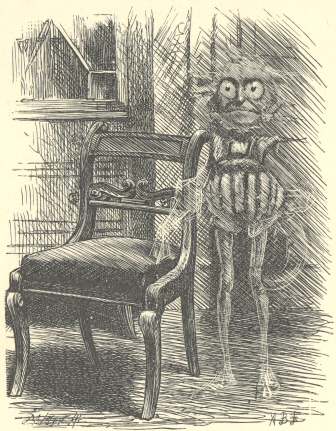
“Out there upon thelanding.”
I turned to look in some surprise,
And there, before my very eyes,
A little Ghost was standing!
And got behind a chair.
“How came you here,” I said, “and why?
I never saw a thing so shy.
Come out! Don’t shiverthere!”
And also tell you why;
But” (here he gave a little bow)
“You’re in so bad a temper now,
You’d think it all alie.
Allow me to remark
That Ghosts have just as good a right
In every way, to fear the light,
As Men to fear thedark.”
Such cowardice in you:
For Ghosts can visit when they choose,
Whereas we Humans ca’n’t refuse
To grant the interview.”
Is not unnatural, is it?
I really feared you meant some harm:
But, now I see that you are calm,
Let me explain my visit.
According to the number
Of Ghosts that they accommodate:
(The Tenant merely counts as weight,
With Coals and other lumber).
When you arrived last summer,
May have remarked a Spectre who
Was doing all that Ghosts can do
To welcome the new-comer.
However cheaply rented:
For, though of course there’s less of fun
When there is only room for one,
Ghosts have to be contented.
Since then you’ve not beenhaunted:
For, as he never sent us word,
’Twas quite by accident we heard
That any one was wanted.
In filling up a vacancy;
Then Phantom, Goblin, Elf, and Sprite—
If all these fail them, they invite
The nicest Ghoul that they cansee.
And that you kept bad wine:
So, as a Phantom had to go,
And I was first, of course, you know,
I couldn’t welldecline.”
Was fittest to be sent
Yet still to choose a brat like you,
To haunt a man of forty-two,
Was no greatcompliment!”
“As you might think. The fact is,
In caverns by the water-side,
And other places that I’ve tried,
I’ve had a lot ofpractice:
A strict domestic part,
And in my flurry I forget
The Five Good Rules of Etiquette
We have to know byheart.”
Towards the little fellow:
He was so utterly aghast
At having found a Man at last,
And looked so scared andyellow.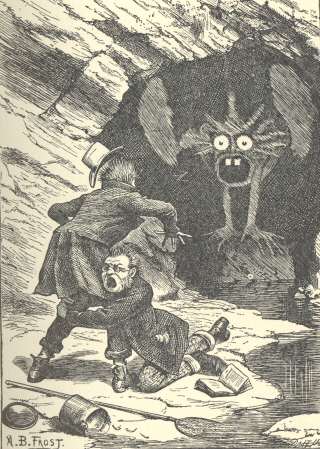
A Ghost is not a dumbthing!
But pray sit down: you’ll feel inclined
(If, like myself, you have not dined)
To take a snack of something:
A thing to offer foodto!
And then I shall be glad to hear—
If you will say them loud and clear—
The Rules that you alludeto.”
This isa piece ofluck!”
“What may I offer you?” said I.
“Well, since you areso kind, I’ll try
A little bit of duck.
Another drop of gravy?”
I sat and looked at him in awe,
For certainly I never saw
A thing so white and wavy.
More vapoury, and wavier—
Seen in the dim and flickering light,
As he proceeded to recite
His “Maxims ofBehaviour.”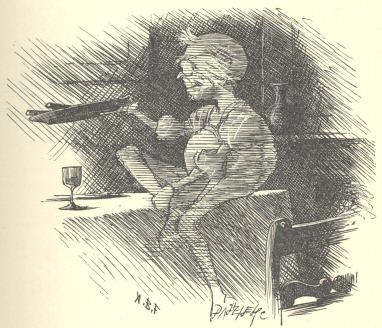
p. 10CANTOII
Hys Fyve Rules
“I’m setting you ariddle—
Is—if your Victim be in bed,
Don’t touch the curtains at his head,
But take them in the middle,
While drawing them asunder;
And in a minute’s time, no doubt,
He’ll raise his head and look about
With eyes of wrath and wonder.
Make the first observation.
Wait for the Victim to commence:
No Ghost of any common sense
Begins a conversation.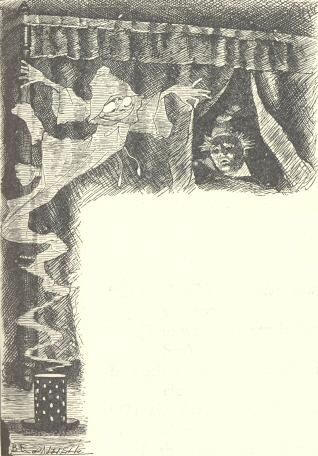 “If he should say ‘How came youhere?’
(The way that youbegan,Sir,)
In such a case your course is clear—
‘On the bat’s back, my littledear!’
Is the appropriate answer.
You’d best perhaps curtailyour
Exertions—go and shake the door,
And then, if he begins to snore,
You’ll know thething’s a failure.
At home or on a walk—
You merely give a hollow groan,
To indicate the kind of tone
In which you mean to talk.
The thing is rather harder.
In such a case success depends
On picking up some candle-ends,
Or butter, in the larder.
(It answers best with suet),
On which you must contrive to glide,
And swing yourself from side to side—
One soon learns how to do it.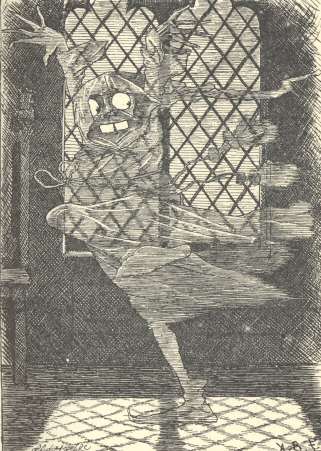
In ceremonious calls:—
‘First burn a blue or crimson light’
(A thing I quite forgot to-night),
‘Then scratch the door orwalls.’”
If you attempt the Guy.
I’ll have no bonfires on myfloor—
And, as for scratching at the door,
I’d like to see youtry!”
The interests of the Victim,
And tells us, as I recollect,
To treat him with a grave respect,
And not to contradicthim.”
To any comprehension:
I only wish someGhosts I’ve met
Would not so constantlyforget
The maxim that youmention!”
The laws of hospitality:
All Ghosts instinctively detest
The Man that fails to treat his guest
With proper cordiality.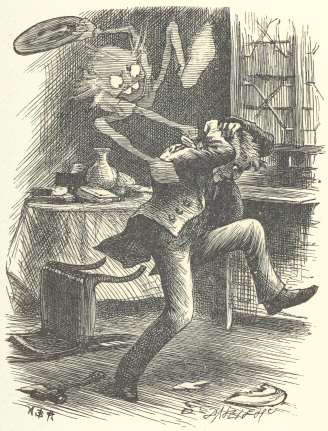
Or strike him with a hatchet,
He is permitted by the King
To drop all formalparleying—
And then you’re sureto catch it!
Where other Ghosts arequartered:
And those convicted of the thing
(Unless when pardoned by the King)
Must instantly be slaughtered.
Ghosts soon unite anew.
The process scarcely hurts at all—
Not more than when you’re what you call
‘Cut up’ by aReview.
That I should quoteentire:—
The King must be addressed as‘Sir.’
This, from a simple courtier,
Is all the Lawsrequire:
With out-and-outpoliteness,
Accost him as‘My Goblin King!
And always use, in answering,
The phrase‘YourRoyal Whiteness!’
After so much reciting:
So, if you don’t object, my dear,
We’ll try a glass of bitter beer—
I think it looksinviting.”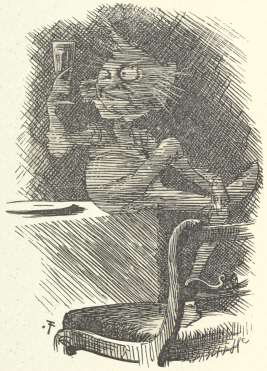
p. 18CANTOIII
Scarmoges
“On such a wretchednight?
I always fancied Ghosts could fly—
If not exactly in the sky,
Yet at a fairishheight.”
To soar above the earth:
But Phantoms often find that wings—
Like many other pleasant things—
Cost more than they are worth.
Can buy them from the Elves:
But weprefer to keep below—
They’re stupid company, you know,
For any but themselves:
From pride, they treat aPhantom
As something quite beneath contempt—
Just as no Turkey ever dreamt
Of noticing a Bantam.”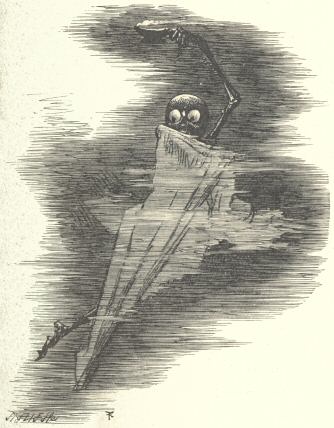
To houses such as mine.
Pray, how did they contrive to know
So quickly that ‘the place was low,’
And that I ‘kept badwine’?”
The little Ghost began.
Here I broke in—“Inspector who?
Inspecting Ghosts is something new!
Explain yourself, myman!”
“One of the Spectreorder:
You’ll very often see him dressed
In a yellow gown, a crimson vest,
And a night-cap with a border.
But caught a sort of chill;
So came to England to be nursed,
And here it took the form of thirst,
Which he complains of still.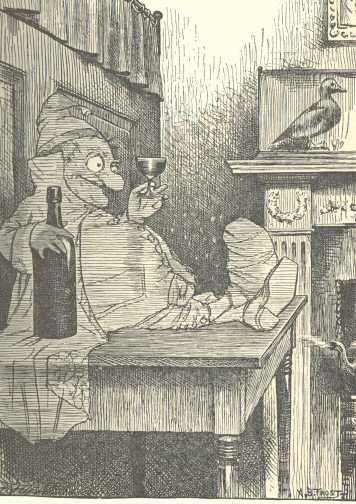
Warms his old bones likenectar:
And as the inns, where it is found,
Are his especial hunting-ground,
We call him theInn-Spectre.”
This agonizing witticism!
And nothing could be sweeter than
My temper, till the Ghost began
Some most provoking criticism.
Yet still you’d better teachthem
Dishes should have some sortof taste.
Pray, why are all the cruets placed
Where nobody can reach them?
His living as a waiter!
Is that queer thingsupposed to burn?
(It’s far too dismal a concern
To call a Moderator).
Were very much too old:
And just remember, if you please,
The nexttime you have toasted cheese,
Don’t let them send itcold.
By getting better flour:
And have you anything to drink
That looks a littleless like ink,
And isn’t quitesosour?”
He muttered “Goodnessgracious!”
And so went on to criticise—
“Your room’s an inconvenient size:
It’s neither snug norspacious.
Serves but to let the duskin—”
“But please,” said I, “to recollect
’Twas fashioned by an architect
Who pinned his faith onRuskin!”
On whom he pinned his faith!
Constructed by whatever law,
So poor a job I never saw,
As I’m a living Wraith!
How much are they adozen?”
I growled “No matter what they are!
You’re getting as familiar
As if you were my cousin!
And so I tell you flat.”
“Aha,” said he, “we’re gettinggrand!”
(Taking a bottle in his hand)
“I’ll soon arrange forthat!”
And gaily cried “Heregoes!”
I tried to dodge it as it came,
But somehow caught it, all the same,
Exactly on my nose.
That I can clearly fix,
Till I was sitting on the floor,
Repeating “Two and five are four,
But five and twoaresix.”
Nor guessed: I only know
That, when at last my sense returned,
The lamp, neglected, dimly burned—
The fire was gettinglow—
A Thing that smirked andsmiled:
And found that he was giving me
A lesson in Biography,
As if I were a child.p. 26CANTOIV
Hys Nouryture
A merry time had we!
Each seated on his favourite post,
We chumped and chawed the buttered toast
They gave us for ourtea.”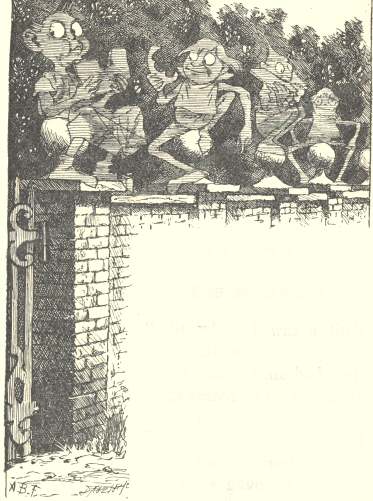
“Don’t say it’snot, because
It’s known as well as Bradshaw’s Guide!”
(The Ghost uneasily replied
He hardly thought it was).
I almost think it is—
‘Three little Ghosteses’ were set
‘On posteses,’ you know, and ate
Their ‘butteredtoasteses.’
I turned to search the shelf.
“Don’t stir!” he cried. “We’ll do without it:
I now remember all about it;
I wrote the thing myself.
At least my agent said it did:
Some literary swell, who saw
It, thought it seemed adapted for
The Magazine he edited.
My mother was a Fairy.
The notion had occurred to her,
The children would be happier,
If they were taught to vary.
And, when it once began, she
Brought us all out in different ways—
One was a Pixy, two were Fays,
Another was a Banshee;
And gave a lot of trouble;
Next came a Poltergeist and Ghoul,
And then two Trolls (which broke the rule),
A Goblin, and a Double—
He added with a yawn,
“I’ll take a pinch)—next came an Elf,
And then a Phantom (that’s myself),
And last, a Leprechaun.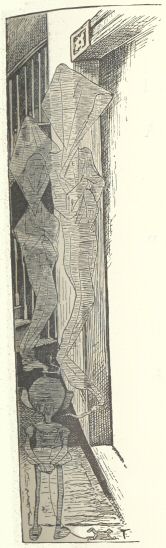 “One day, some Spectres chanced to call,
Dressed in the usual white:
I stood and watched them in the hall,
And couldn’t make them out at all,
They seemed so strange asight.
That looked all head and sack;
But Mother told me not to stare,
And then she twitched me by the hair,
And punched me in the back.
Had been a Spectre born.
p. 30Butwhat’s the use?” (He heaved a sigh.)
“Theyare the ghost-nobility,
And look on uswithscorn.
When I was barely six,
I went out with an older one—
And just at first I thought it fun,
And learned a lot of tricks.
Wherever I was sent:
I’ve often sat and howled for hours,
Drenched to the skin with driving showers,
Upon a battlement.
When you begin to speak:
This is the newest thing in tone—”
And here (it chilled me to the bone)
He gave an awfulsqueak.
That sounds an easy thing?
p. 31Try ityourself, my little dear!
It took mesomething like a year,
With constant practising.
And caught the double sob,
You’re pretty much where you began:
Just try and gibber if you can!
That’s something likea job!
I’m sure you couldn’tdo it, e-
ven if you practised night and day,
Unless you have a turn that way,
And natural ingenuity.
Of Ghosts, in days of old,
Who ‘gibbered in the Roman streets,’
Dressed, if you recollect, in sheets—
They must have found it cold.
In dressing as a Double;
p. 32But,though it answers as a puff,
It never has effect enough
To make it worth the trouble.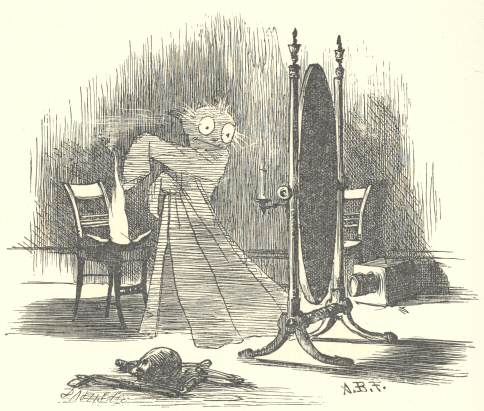
I had for being funny.
The setting-up is always worst:
Such heaps of things you want at first,
One must be made of money!
With skull, cross-bones, andsheet;
Blue lights to burn (say) two an hour,
Condensing lens of extra power,
And set of chains complete:
The fitting on the robe—
And testing all the coloured fire—
The outfit of itself would tire
The patience of a Job!
The Haunted-House Committee:
I’ve often known them make a fuss
Because a Ghost was French, or Russ,
Or even from the City!
For one, the Irishbrogueis:
And then, for all you have to do,
One pound a week they offer you,
And find yourself inBogies!”p. 34CANTOV
Byckerment
I said. “They should,by rights,
Give them a chance—because, you know,
The tastes of people differ so,
Especially in Sprites.”
“Consult them? Not abit!
’Twould be a job to drive one wild,
To satisfy one single child—
There’d be no end toit!”
Said I, “to pick andchoose:
But, in the case of men like me,
I think ‘Mine Host’ might fairly be
Allowed to state hisviews.”
Folk are so full of fancies.
We visit for a single day,
And whether then we go, or stay,
Depends on circumstances.
Before the thing’sarranged,
Still, if he often quits his post,
Or is not a well-mannered Ghost,
Then you can have him changed.
I mean a man of sense;
And if the house is not too new—”
“Why, what has that,” said I, “to do
With Ghost’sconvenience?”
It’s such a job to trimit:
But, after twenty years or so,
The wainscotings begin to go,
So twenty is the limit.”
Remember having heard:
p.36“Perhaps,” I said, “you’ll be sogood
As tell me what is understood
Exactly by that word?”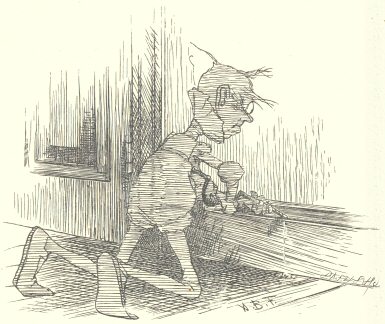
The Ghost replied, and laughed:
“It means the drilling holes by scores
In all the skirting-boards and floors,
To make a thorough draught.
Are all you really need
To let the wind come whistling through—
But herethere’ll be a lot to do!”
I faintly gasped“Indeed!
Be bound,” I added,trying
(Most unsuccessfully) to smile,
“You’d have been busy all this while,
Trimming andbeautifying?”
Have stayed anotherminute—
But still no Ghost, that’s any good,
Without an introduction would
Have ventured to begin it.
Was certainly to go:
But, with the roads in such a state,
I got the Knight-Mayor’s leave to wait
For half an hour or so.”
Of answering my question,
“Well, if you don’t know that,” hesaid,
“Either you never go to bed,
Or you’ve a granddigestion!
That eat too much at night:
His duties are to pinch, and poke,
And squeeze them till they nearly choke.”
(I said “It serves themright!”)
He muttered, “eggs andbacon—
Lobster—and duck—and toasted cheese—
If they don’t get an awful squeeze,
I’m very much mistaken!
Well suits the occupation:
In point of fact, if you must know,
We used to call him years ago,
The Mayor andCorporation!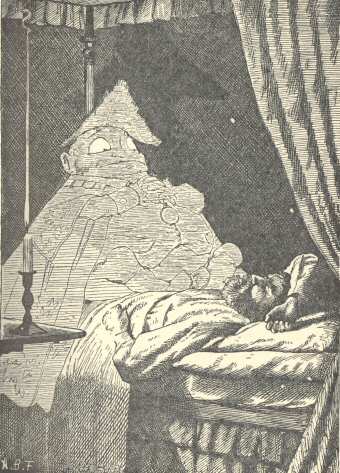
I knowthat every Spritemeant
To vote for me, but did not dare—
He was so frantic with despair
And furious with excitement.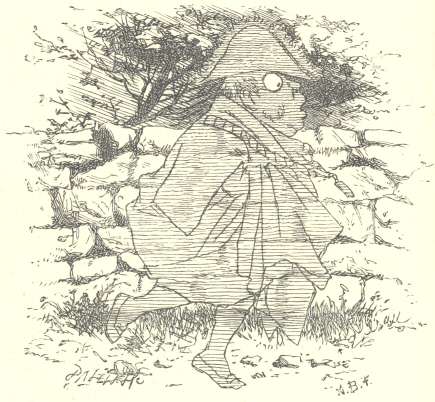
He ran to tell the King;
And being the reverse of slim,
p. 41A two-miletrot was not for him
A very easy thing.
(As it was baking hot,
And he was over twenty stone),
The King proceeded, half in fun,
To knight him on thespot.”
(I fired up like a rocket).
“He did it just for punning’s sake:
‘The man,’ says Johnson, ‘that would make
A pun, would pick apocket!’”
I argued for a while,
And did my best to prove the thing—
The Phantom merely listening
With a contemptuous smile.
I had recourse tosmoking—
“Your aim,” he said, “is excellent:
p.42But—when you call it argument—
Of course you’re onlyjoking?”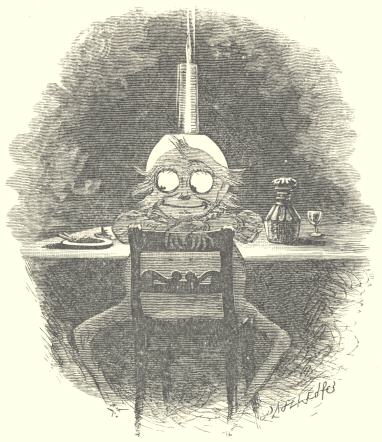
I roused myself at length
To say “At least I do defy
The veriest sceptic to deny
That union is strength!”
I listened in allmeekness—
“Unionis strength, I’m bound to say;
In fact, the thing’s as clear as day;
But onionsare aweakness.”p. 44CANTOVI
Dyscomfyture
Who never climbed before:
Who finds it, in a little time,
Grow every moment less sublime,
And votes the thing a bore:
Dares not desert his quest,
But, climbing, ever keeps his eye
On one small hut against the sky
Wherein he hopes to rest:
With many a puff and pant:
Who still, as rises the ascent,
In language grows more violent,
Although in breath more scant:
That crowns the upward track.
p. 45And,entering with unsteady pace,
Receives a buffet in the face
That lands him on his back: And feels himself, like one in sleep,
Glide swiftly down again,
A helpless weight, from steep to steep,
Till, with a headlong giddy sweep,
He drops upon the plain—
Conviction to a ghost,
And found it quite a different thing
From any human arguing,
Yet dared not quit my post
To which I hoped to come,
I strove to prove the matter true
By putting everything I knew
Into an axiom:
With ‘therefore’ or‘because,’
I blindly reeled, a hundred ways,
About the syllogistic maze,
Unconscious where I was.
Don’t bluster any more.
Now dobe cool and take a nap!
Such a ridiculous old chap
Was never seen before!
Who got one day so furious
In arguing, the simple heat
Scorched both his slippers off his feet!”
I said “That’s verycurious!”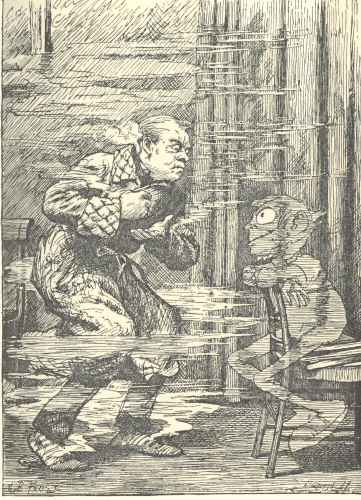
And sounds perhaps like fibs:
But still it’s true as true can be—
As sure as your name’s Tibbs,” said he.
I said “My name’snotTibbs.”
A shade or two lesshearty—
“Why, no,” said I. “My proper name
Is Tibbets—” “Tibbets?” “Aye, the same.”
“Why, then YOU’RE NOT THE PARTY!”
That shivered half the glasses.
“Why couldn’t you have told me so
Three quarters of an hour ago,
You prince of all the asses?
To spend the night in smoking,
And then to find that it’s in vain—
And I’ve to do it all again—
It’s really tooprovoking!
To mutter some excuse.
“Who can have patience with a man
p.50That’s got no more discretion than
An idiotic goose?
Of telling me at once
That this was not the house!” he said.
“There, that’ll do—be off to bed!
Don’t gape like that, youdunce!”
On mein such a fashion!
Why didn’t you enquire my name
The very minute that you came?”
I answered in a passion.
To come so far on foot—
But how was Ito blame for it?”
“Well, well!” said he. “I must admit
That isn’t badly put.
The best of wine andvictual—
p. 51Excuse myviolence,” said he,
“But accidents like this, you see,
They put one out a little.
Shake hands, oldTurnip-top!”
The name was hardly to my mind,
But, as no doubt he meant it kind,
I let the matter drop.
When I am gone, perhaps
They’ll send you some inferior Sprite,
Who’ll keep you in a constant fright
And spoil your soundest naps.
Then, if he leers and chuckles,
You just be handy with a stick
(Mind that it’s pretty hard and thick)
And rap him on the knuckles!
Perhaps you’re not aware
p. 52That, ifyou don’t behave, you’ll soon
Be chuckling to another tune—
And so you’d best takecare!’
Of such like goings-on—
But gracious me! It’s getting light!
Good-night, old Turnip-top, good-night!”
A nod, and he was gone.
p. 53CANTOVII
Sad Souvenaunce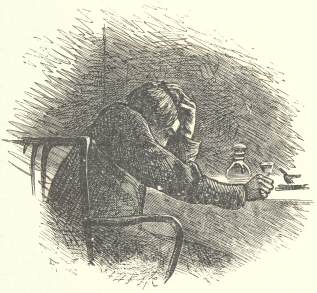
Or can I have beendrinking?”
But soon a gentler feeling crept
Upon me, and I sat and wept
An hour or so, like winking.
I sobbed. “In fact, Idoubt
p. 54If it wasworth his while to go—
And who is Tibbs, I’d like to know,
To make such work about?
It’s possible,”I said,
“He won’t be over-pleased to be
Dropped in upon at half-past three,
After he’s snug in bed.
Squeaking and all the rest ofit,
As he was doing here just now—
Iprophesy there’ll be a row,
And Tibbs will have the best ofit!”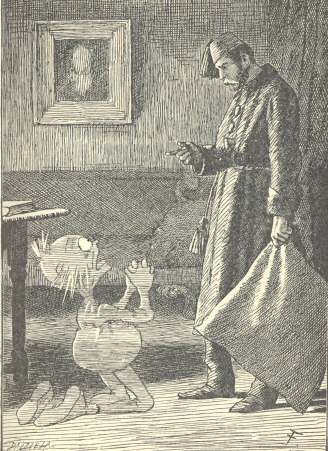
The friendly Phantom back,
It seemed to me the proper thing
To mix another glass, and sing
The following Coronach.
Best of Familiars!
p. 56Naythen, farewell, my duckling roast,
Farewell, farewell, my tea and toast,
My meerschaum andcigars!
The sweets of lifeinsipid,
Whenthou, my charmer, art away—
Old Brick, or rather, let me say,
OldParallelepiped!’
I ceased—abruptly,rather:
But, after such a splendid word
I felt that it would be absurd
To try it any farther.
To seek the welcome downy,
And slept, and dreamed till break of day
Of Poltergeist and Fetch and Fay
And Leprechaun and Brownie!
By any kind of Sprite;
p. 57Yet stillthey echo in my head,
Those parting words, so kindly said,
“Old Turnip-top,good-night!”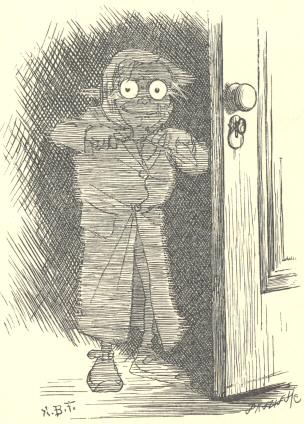
p.58ECHOES
Was eight years old, she said:
Every ringlet, lightly shaken, ran itself in golden thread.
Of me she shall not win renown:
For the baseness of its nature shall have strength to drag herdown.
There stands the Inspector at thydoor:
Like a dog, he hunts for boys who know not two and two arefour.”
She said, and wondering looked atme:
“It is the dead unhappy night, and I must hurry home totea.”p. 59A SEADIRGE
The income-tax, gout, an umbrella forthree—
That I hate, but the thing that I hate the most
Is a thing they call the Sea.
Ugly I’m sure you’ll allow it to be:
Suppose it extended a mile or more,
That’svery like the Sea.
Cruel, but all very well for a spree:
Suppose that he did so day and night,
Thatwould be like the Sea.
Tens of thousands passed by me—
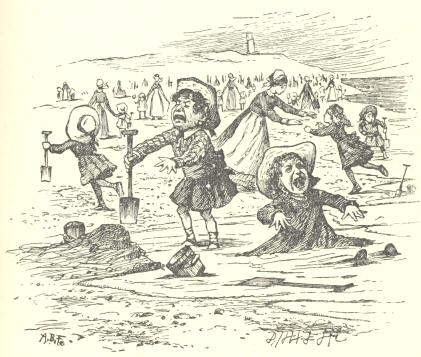
All leading children with wooden spades,
And this was by the Sea.
Who was it cut them out of the tree?
None, I think, but an idiot could—
Or one that loved the Sea.
With ‘thoughts as boundless, and souls asfree’:
But, suppose you are very unwell in the boat,
How do you like the Sea?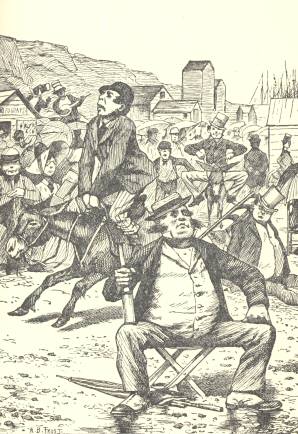
(Whence is derived the verb ‘toflee’).
Where have you been by it most annoyed?
In lodgings by the Sea.
A decided hint of salt in your tea,
And a fishy taste in the very eggs—
By all means choose the Sea.
You prefer not a vestige of grass or tree,
And a chronic state of wet in your feet,
Then—I recommend the Sea.
Pleasant friends they are to me!
It is when I am with them I wonder most
That anyone likes the Sea.
To climb the heights I madly agree;
And, after a tumble or so from the cliff,
They kindly suggest the Sea.
That they laugh with such an excess of glee,
As I heavily slip into every pool
That skirts the cold cold Sea.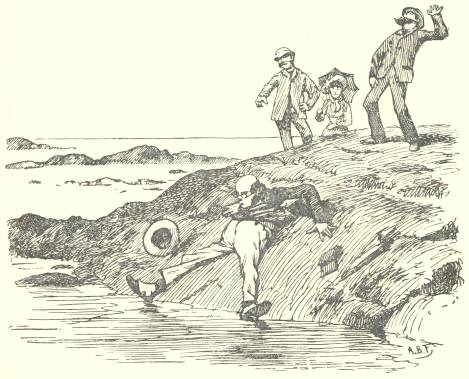
p. 64YeCarpette Knyghte
Ne doe Y envye those
Who scoure ye playne yn headye course
Tyll soddayne on theyre nose
They lyghte wyth unexpected force
Yt ys—a horse of clothes.
Wyth styrruppes, Knyghte, to boote?”
I sayde not that—I answere “Noe”—
Yt lacketh such, I woote:
Yt ys a mutton-saddel, loe!
Parte of ye fleecye brute.
As shall bee seene yn tyme.
Ye jawe of horse yt wyll not fytte;
Yts use ys more sublyme.
Fayre Syr, how deemest thou of yt?
Yt ys—thys bytte of rhyme.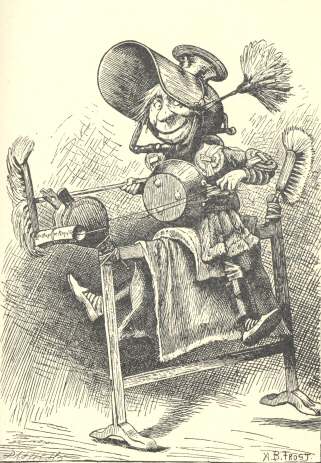
p.66HIAWATHA’S PHOTOGRAPHING
Took the camera of rosewood,
Made of sliding, folding rosewood;
Neatly put it all together.
In its case it lay compactly,
Folded into nearly nothing;
p. 67But heopened out the hinges,
Pushed and pulled the joints and hinges,
Till it looked all squares and oblongs,
Like a complicated figure
In the Second Book of Euclid.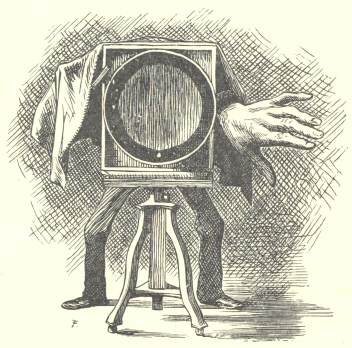
Crouched beneath its dusky cover—
Stretched his hand, enforcing silence—
Said, “Be motionless, I beg you!”
Mystic, awful was the process.
p.68All the family in order
Sat before him for their pictures:
Each in turn, as he was taken,
Volunteered his own suggestions,
His ingenious suggestions.
First the Governor, the Father:
He suggested velvet curtains
Looped about a massy pillar;
And the corner of a table,
Of a rosewood dining-table.
He would hold a scroll of something,
Hold it firmly in his left-hand;
He would keep his right-hand buried
(Like Napoleon) in his waistcoat;
He would contemplate the distance
With a look of pensive meaning,
As of ducks that die ill tempests.
Grand, heroic was the notion:
Yet the picture failed entirely:
Failed, because he moved a little,
Moved, because he couldn’t help it.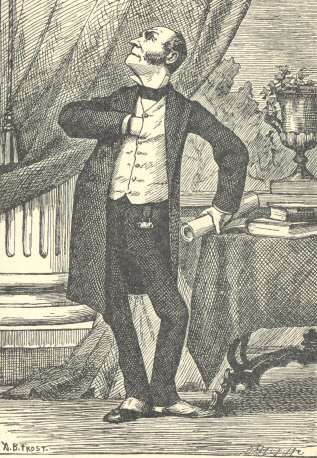
Shewould have her picture taken.
She came dressed beyond description,
p. 70Dressed injewels and in satin
Far too gorgeous for an empress.
Gracefully she sat down sideways,
With a simper scarcely human,
Holding in her hand a bouquet
Rather larger than a cabbage.
All the while that she was sitting,
Still the lady chattered, chattered,
Like a monkey in the forest.
“Am I sitting still?” she asked him.
“Is my face enough in profile?
Shall I hold the bouquet higher?
Will it came into the picture?”
And the picture failed completely.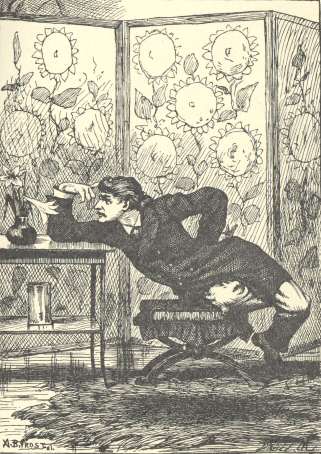
He suggested curves of beauty,
Curves pervading all his figure,
Which the eye might follow onward,
Till they centered in the breast-pin,
Centered in the golden breast-pin.
He had learnt it all from Ruskin
(Author of ‘The Stones of Venice,’
‘Seven Lamps of Architecture,’
‘Modern Painters,’ and some others);
p. 72Andperhaps he had not fully
Understood his author’s meaning;
But, whatever was the reason,
All was fruitless, as the picture
Ended in an utter failure.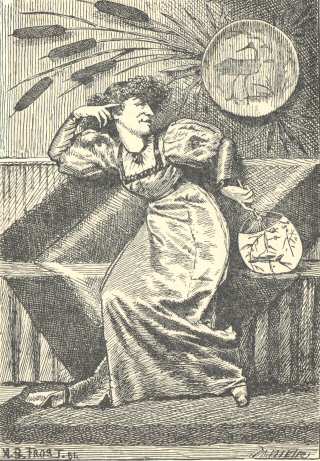
She suggested very little,
Only asked if he would take her
With her look of ‘passive beauty.’
Her idea of passive beauty
Was a squinting of the left-eye,
Was a drooping of the right-eye,
Was a smile that went up sideways
To the corner of the nostrils.
Hiawatha, when she asked him,
Took no notice of the question,
Looked as if he hadn’t heard it;
But, when pointedly appealed to,
Smiled in his peculiar manner,
Coughed and said it ‘didn’t matter,’
Bit his lip and changed the subject.
Nor in this was he mistaken,
As the picture failed completely.
So in turn the other sisters.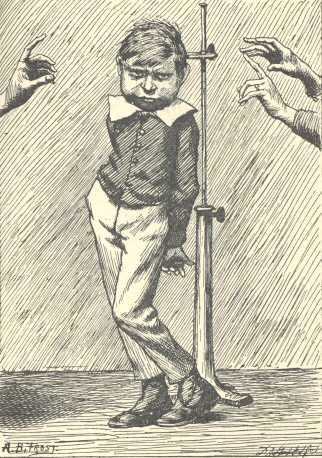
Very rough and thick his hair was,
Very round and red his face was,
Very dusty was his jacket,
Very fidgety his manner.
And his overbearing sisters
Called him names he disapproved of:
Called him Johnny, ‘Daddy’s Darling,’
Called him Jacky, ‘Scrubby School-boy.’
And, so awful was the picture,
In comparison the others
Seemed, to one’s bewildered fancy,
To have partially succeeded.
Finally my Hiawatha
Tumbled all the tribe together,
(‘Grouped’ is not the right expression),
And, as happy chance would have it
Did at last obtain a picture
Where the faces all succeeded:
Each came out a perfect likeness.
Then they joined and all abused it,
Unrestrainedly abused it,
As the worst and ugliest picture
They could possibly have dreamed of.
‘Giving one such strange expressions—
Sullen, stupid, pert expressions.
Really any one would take us
(Any one that did not know us)
For the most unpleasant people!’
(Hiawatha seemed to think so,
Seemed to think it not unlikely).
All together rang their voices,
Angry, loud, discordant voices,
As of dogs that howl in concert,
As of cats that wail in chorus.
But my Hiawatha’s patience,
His politeness and his patience,
Unaccountably had vanished,
And he left that happy party.
Neither did he leave them slowly,
With the calm deliberation,
The intense deliberation
Of a photographic artist:
But he left them in a hurry,
Left them in a mighty hurry,
Stating that he would not stand it,
Stating in emphatic language
What he’d be before he’d stand it.
p. 77Hurriedlyhe packed his boxes:
Hurriedly the porter trundled
On a barrow all his boxes:
Hurriedly he took his ticket:
Hurriedly the train received him:
Thus departed Hiawatha.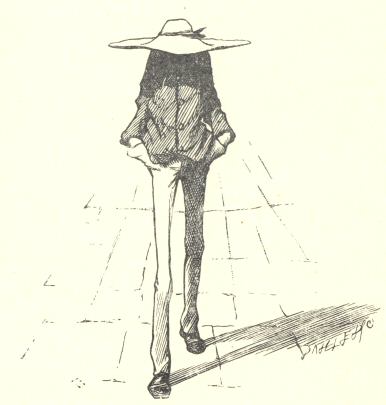
p.78MELANCHOLETTA
She soothed her secret sorrow:
At night she sighed “I fear ’twas wrong
Such cheerful words to borrow.
Dearest, a sweeter, sadder song
I’ll sing to thee to-morrow.”
That I was glad to hear it:
I left the house at break of day,
And did not venture near it
Till time, I hoped, had worn away
Her grief, for nought could cheer it!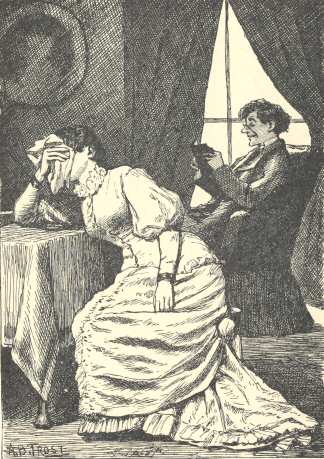
The wretched home thou keepest!
p. 80Thybrother, drowned in daily woe,
Is thankful when thou sleepest;
For if I laugh, however low,
When thou’rt awake, thou weepest!
(Excuse the slang expression)
To Sadler’s Wells to see the play
In hopes the new impression
Might in her thoughts, from grave to gay
Effect some slight digression.
To join us in our folly,
Whose mirth, I thought, might serve to drown
My sister’s melancholy:
The lively Jones, the sportive Brown,
And Robinson the jolly.
That I myself had taught her,
Meant to allay my sister’s moans
Like oil on troubled water:
p. 81I rushedto Jones, the lively Jones,
And begged him to escort her.
To joke about the weather—
To ventilate the last ‘on dit’—
To quote the price of leather—
She groaned “Here I and Sorrow sit:
Let us lament together!”
Delay will spoil the venison.”
“My heart is wasted with my woe!
There is no rest—in Venice, on
The Bridge of Sighs!” she quoted low
From Byron and from Tennyson.
In solemn silence swallowed,
The sobs that ushered in each dish,
And its departure followed,
Nor yet my suicidal wish
To bethe cheese I hollowed.
To start a conversation;
“Madam,” the sportive Brown essayed,
“Which kind of recreation,
Hunting or fishing, have you made
Your special occupation?”
As if of india-rubber.
“Hounds in full cryI like,” said she:
(Oh how I longed to snub her!)
“Of fish, a whale’s the one for me,
It is so full of blubber!”
“It’s dull,” she wept, “andso-so!”
Awhile I let her tears flow on,
She said they soothed her woe so!
At length the curtain rose upon
‘Bombastes Furioso.’
To rouse her into laughter:
p. 83Herpensive glances wandered wide
From orchestra to rafter—
“Tier upon tier!” she said, and sighed;
And silence followed after.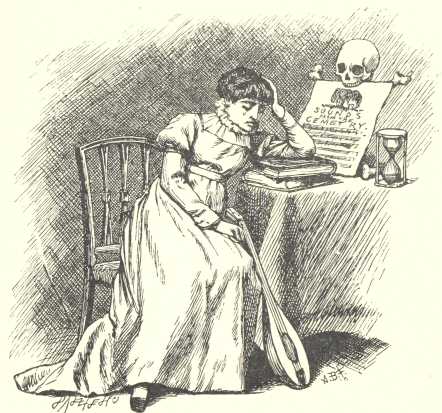
p. 84AVALENTINE
Be actual unless, when past,
They leave us shuddering and aghast,
With anguish smarting?
And cannot friends be firm and fast,
And yet bear parting?
Calmly resign the little all
(Trifling, I grant, it is and small)
I have of gladness,
And lend my being to the thrall
Of gloom and sadness?
And full dolorum omnium,
Excepting when youchoose to come
And share my dinner?
At other times be sour and glum
And daily thinner?
Who’d prove his friendship true and deep
By day a lonely shadow creep,
At night-time languish,
Oft raising in his broken sleep
The moan of anguish?
His fair one be denied his gaze,
Sinks not in grief and wild amaze,
But, wiser wooer,
He spends the time in writing lays,
And posts them to her.
Till even the poet is aghast,
p. 86A touchingValentine at last
The post shall carry,
When thirteen days are gone and past
Of February.
In desert waste or crowded street,
Perhaps before this week shall fleet,
Perhaps to-morrow.
I trust to find yourheart the seat
Of wasting sorrow.p. 87THETHREE VOICES
The First Voice
He laughed aloud for very glee:
There came a breeze from off the sea: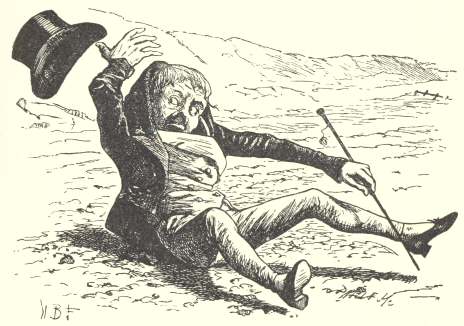
It fanned his forehead as he sat—
It lightly bore away his hat,
Like maid enchanted in a wood,
Frowning as darkly as she could.
Unerringly she pinned it down,
Right through the centre of the crown.
Regardless of its battered rim,
She took it up and gave it him.
Then faltered forth his gratitude
In words just short of being rude:
And it had cost him four-and-nine,
And he was going out to dine.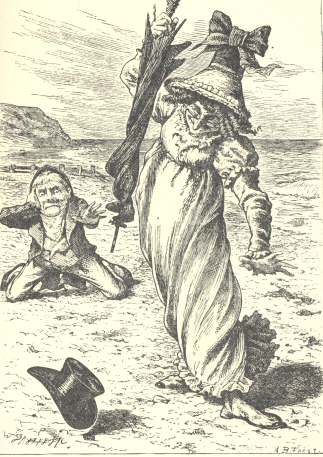
“To bend thy being to a bone
Clothed in a radiance not its own!”
There was a meaning in her grin
That made him feel on fire within.
“’Tis solid nutriment to me.
Dinner is Dinner: Tea is Tea.”
Let thy scant knowledge find increase.
Say ‘Men are Men, and Geese are Geese.’”
The thought “That I could get away!”
Strove with the thought “But I must stay.
“To swallow wines all foam and froth!
To simper at a table-cloth!
To join the gormandising troup
Who find a solace in the soup?
Thy well-bred manners were enough,
Without such gross material stuff.”
“Are not willing to be fed:
Nor are they well without the bread.”
“There are,” she said, “a kind of folk
Who have no horror of a joke.
Of common earth and common air:
We come across them here and there:
A sort of semi-human shape
Suggestive of the man-like Ape.”
“One fixed exception there must be.
That is, the Present Company.”
He, aiming blindly in the dark,
With random shaft had pierced the mark.
Yet madly strove with might and main
To get the upper hand again.
As though unconscious of his speech,
She said “Each gives to more than each.”
He faltered “Gifts may pass away.”
Yet knew not what he meant to say.
“Each heart with each doth coincide.
What boots it? For the world is wide.”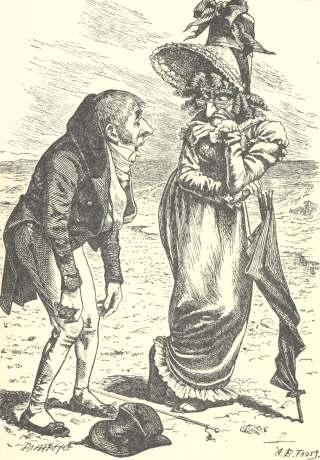
“The vast unfathomable sea
Is but a Notion—unto me.”
Upon his unresisting head,
Like half a hundredweight of lead.
That reckless and abandoned one
Who stoops to perpetrate a pun.
That goes to Christmas Pantomimes—
Is capable of anycrimes!”
And, with a shamed and crimson cheek,
Moaned “This is harder than Bezique!”
He felt his very whiskers glow,
And frankly owned “I do not know.”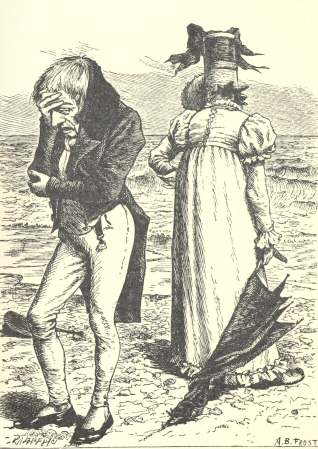
Or sunlit hues on cloistered pane,
His colour came and went again.
Yet with a tinge of bitterness,
She said “The More exceeds the Less.”
He urged, “and so extreme in date,
It were superfluous to state.”
In tone of cold malignity:
“To others, yea: but not to thee.”
And when he urged “For pity’s sake!”
Once more in gentle tones she spake.
That is by Intellect supplied,
And within that Idea doth hide:
Still further inwardly may go,
And find Idea from Notion flow:
Is to a glorious circle wrought,
For Notion hath its source in Thought.”
Yet gradually one might trace
A shadow growing on his face.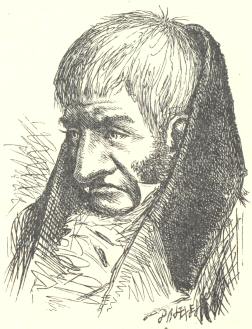
p. 98TheSecond Voice
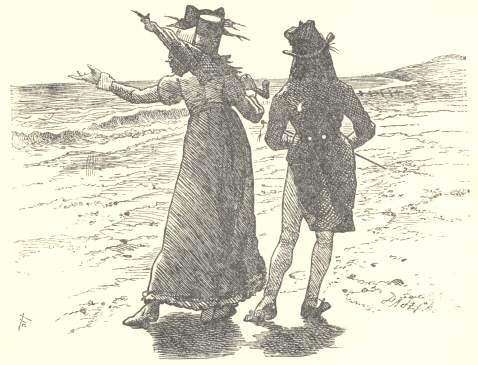
Her tongue was very apt to teach,
And now and then he did beseech
Because the talk was all her own,
And he was dull as any drone.
And ceaseless flowed her dreary talk,
Tuned to the footfall of a walk.
And, when at length she asked him “Which?”
It mounted to its highest pitch.
Drowned in the sullen moaning wave,
Lost in the echoes of the cave.
Like shaft from bow at random shot,
He spoke, but she regarded not.
But with a downward leaden eye
Went on as if he were not by
Strange questions raised on “Why?” and“Whence?”
And wildly tangled evidence.
Feebly implored her to explain,
She simply said it all again.
He spake, neglecting Sound and Sense,
And careless of all consequence:
Abstract—that is—an Accident—
Which we—that is to say—I meant—”
At length his speech was somewhat hushed,
She looked at him, and he was crushed.
She fixed him with a stony eye,
And he could neither fight nor fly.
His speech, half guessed at and half heard,
As might a cat a little bird.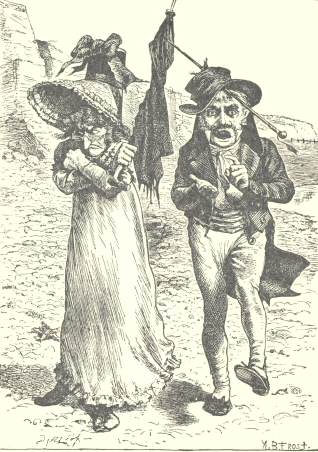
His views, and stripped them to the bone,
Proceeded to unfold her own.
Of other thoughts no thought but this,
Harmonious dews of sober bliss?
Through towering nothingness descry
The grisly phantom hurry by?
See mouths that gape, and eyes that stare
And redden in the dusky glare?
The darkness toppling from the height,
The feathery train of granite Night?
Through the thick curtain of his tears
Catch glimpses of his earlier years,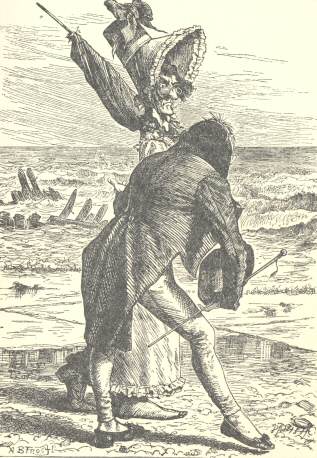
Old shufflings on the sanded floor,
Old knuckles tapping at the door?
One pallid form shall ever rise,
And, bodying forth in glassy eyes
Low peering through the tangled wood,
Shall freeze the current of his blood.”
And savage rapture, like a tooth
She wrenched some slow reluctant truth.
When summer suns have dried the rill,
She reached a full stop, and was still.
As when the loaded omnibus
Has reached the railway terminus:
Is heard the engine’s stifled beat,
The velvet tread of porters’ feet.
She moved her lips without a sound,
And every now and then she frowned.
And joyed in its tranquillity,
And in that silence dead, but she
Then, like the echo of a dream,
Harked back upon her threadbare theme.
But could not fathom what she meant:
She was not deep, nor eloquent.
The even swaying of her hand
Was all that he could understand.
Where thirteen wretches sat in gloom,
Waiting—he thought he knew for whom:
Each feebly huddled on a chair,
In attitudes of blank despair:
For all their brains were pumped away,
And they had nothing more to say—
Who shrieked “We’ll wait no longer, John!
Tell them to set the dinner on!”
He saw once more that woman dread:
He heard once more the words she said.
He sat and watched the coming tide
Across the shores so newly dried.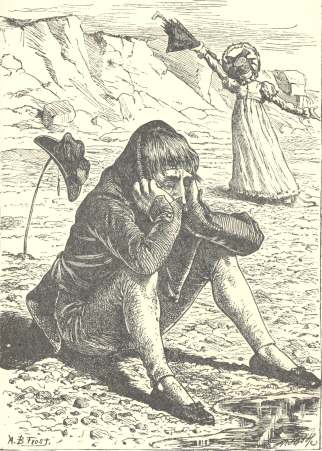
The breeze that whispered in his ear,
The billows heaving far and near,
To hang upon her every word:
“In truth,” he said, “it was absurd.”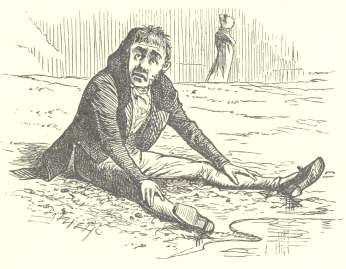
p. 109TheThird Voice
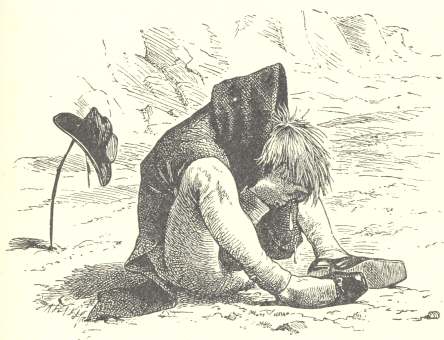
Within a little moment’s space
Quick tears were raining down his face
A wordless voice, nor far nor near,
He seemed to hear and not to hear.
If so, why not? Of this remark
The bearings are profoundly dark.”
Easier I count it to explain
The jargon of the howling main,
To con, with inexpressive look,
An unintelligible book.”
In words imagined more than said,
Soundless as ghost’s intended tread:
Why quittedst thou the voice of lore?
Why not endure, expecting more?”
“I’d writhe in depths of cavern vast,
Some loathly vampire’s rich repast.”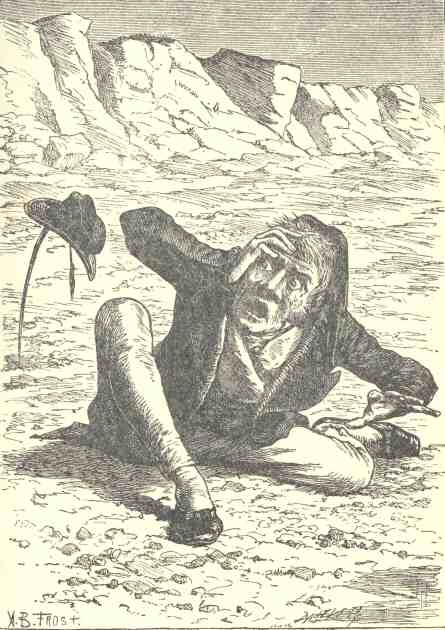
To coop within the narrow fence
That rings thyscant intelligence.”
But there was something in her tone
That chilled me to the very bone.
And most unpleasantly severe;
Her epithets were very queer.
I could not choose but deem her wise;
I did not dare to criticise;
So deep in tangled argument
That all my powers of thought were spent.”
“Yet truth is truth: you know you did.”
A little wink beneath the lid.
Prone to the dust he bent his head,
And lay like one three-quarters dead
Lost in the depths of leafy trees—
Left him by no means at his ease.
With hands, through denser-matted hair,
More tightly clenched than then they were.
Majestic frowned the mountain head,
“Tell me my fault,” was all he said.
Scorched in his head each haggard eye,
Then keenest rose his weary cry.
Smiled grimly on the solemn fun,
“Alack,” he sighed, “what haveIdone?”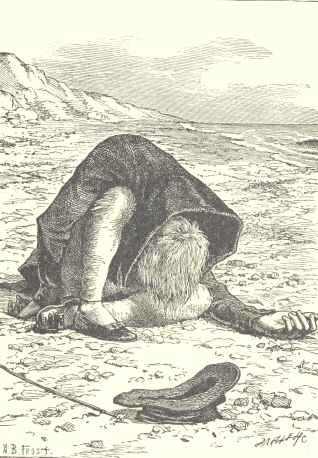
When the cold grasp of leaden Night
Dashed him to earth, and held him tight.
Thunders were silence to his groan,
Bagpipes sweet music to its tone:
Shall Pain and Mystery profound
Pursue me like a sleepless hound,
Me, still in ignorance of the cause,
Unknowing what I broke of laws?”
Like echoed flow of silent stream,
Or shadow of forgotten dream,
“Her fate with thine was intertwined,”
So spake it in his inner mind: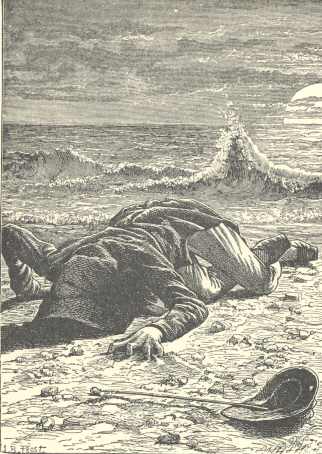
Each proved the other’s blight and bar:
Each unto each were best, most far:
Thou, a scared dullard, gibbering low,
And she, anavalanche of woe!”p.118TÈMA CON VARIAZIÒNI
Nor anything that cost me much:
High prices profit those who sell,
But why should I be fond of such?
My son comes trotting home from school;
He’s had a fight but can’t tell why—
He always was a little fool!
He kicked me out, her testy Sire:
And when I stained my hair, that Belle
Might note the change, and thusadmire
A muddy green or staring blue:
Whilst one might trace, with half an eye,
The still triumphant carrot through.p. 120AGAME OF FIVES
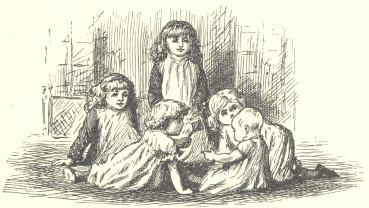
Rolling on the hearthrug, full of tricks and fun.
Sitting down to lessons—no more time for tricks.
Music, Drawing, Languages, and food enough for seven!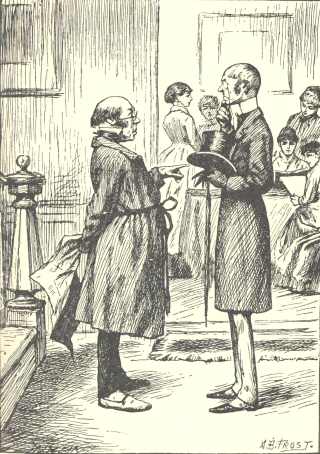
Each young man that calls, I say “Now tell me which youmean!”
But, if nobody proposes, what is there to be done?
When girls may be engaging, but they somehow don’tengage.
So gracious to the shy young men they snubbed so much before!
We jog along together, like the rest of human kind:
But the quondam “careless bachelor” begins to thinkhe knows
The answer to that ancient problem “how the moneygoes”!p.123POETA FIT, NON NASCITUR
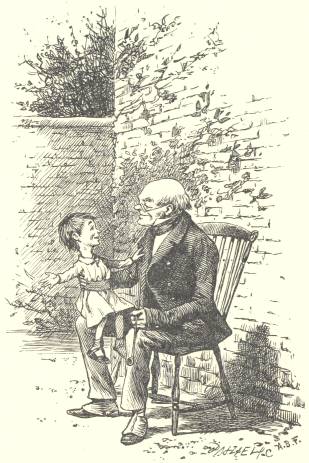
How shall I write in rhyme?
p. 124You toldme once ‘the very wish
Partook of the sublime.’
Then tell me how! Don’t put me off
With your ‘another time’!”
To hear his sudden sally;
He liked the lad to speak his mind
Enthusiastically;
And thought “There’s no hum-drum in him,
Nor any shilly-shally.”
Before you’ve been to school?
Ah, well! I hardly thought you
So absolute a fool.
First learn to be spasmodic—
A very simple rule.
And then you chop it small;
Then mix the bits, and sort them out
Just as they chance to fall:
p. 125Theorder of the phrases makes
No difference at all.
Remember what I say,
That abstract qualities begin
With capitals alway:
The True, the Good, the Beautiful—
Those are the things that pay!
A shape, or sound, or tint;
Don’t state the matter plainly,
But put it in a hint;
And learn to look at all things
With a sort of mental squint.”
Of mutton-pies to tell,
Should I say ‘dreams of fleecy flocks
Pent in a wheaten cell’?”
“Why, yes,” the old man said: “that phrase
Would answer very well.
That suit with any word—
As well as Harvey’s Reading Sauce
With fish, or flesh, or bird—
Of these, ‘wild,’ ‘lonely,’‘weary,’ ‘strange,’
Are much to be preferred.”
To take them in a lump—
As ‘the wild man went his weary way
To a strange and lonely pump’?”
“Nay, nay! You must not hastily
To such conclusions jump.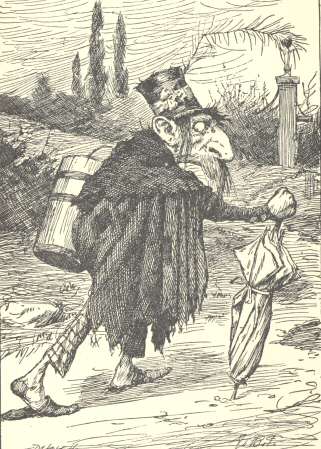
Give zest to what you write;
And, if you strew them sparely,
They whet the appetite:
But if you lay them on too thick,
You spoil the matter quite!
Your reader, you should show him,
p. 128Musttake what information he
Can get, and look for no im-
mature disclosure of the drift
And purpose of your poem.
How much he can endure—
Mention no places, names, or dates,
And evermore be sure
Throughout the poem to be found
Consistently obscure.
To which it shall extend:
Then fill it up with ‘Padding’
(Beg some of any friend):
Your great Sensation-stanza
You place towards the end.”
Grandfather, tell me, pray?
I think I never heard the word
So used before to-day:
p. 129Be kindenough to mention one
‘Exempligratiâ.’”
Across the garden-lawn,
Where here and there a dew-drop
Yet glittered in the dawn,
Said “Go to the Adelphi,
And see the ‘Colleen Bawn.’
The theory is his,
Where Life becomes a Spasm,
And History a Whiz:
If that is not Sensation,
I don’t know what it is.
Have lost its present glow—”
“And then,” his grandson added,
“We’ll publish it, you know:
Green cloth—gold-lettered at the back—
In duodecimo!”
To see the eager lad
Rush madly for his pen and ink
And for his blotting-pad—
But, when he thought of publishing,
His face grew stern and sad.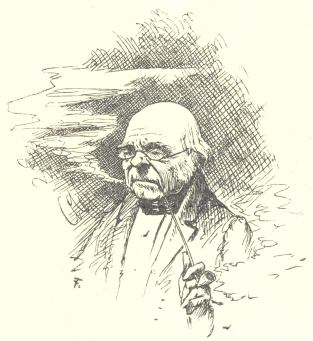
p. 131SIZEAND TEARS
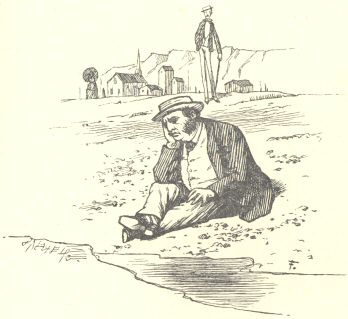
Beside the salt sea-wave,
And fall into a weeping fit
Because I dare not shave—
p. 132A littlewhisper at my ear
Enquires the reason of my fear.
Should recognise me here,
He’d bellow out my name in tones
Offensive to the ear:
He chaffs me so on being stout
(A thing that always puts me out).”
Farewell, farewell to hope,
If he should look this way, and if
He’s got his telescope!
To whatsoever place I flee,
My odious rival follows me!
I meet him out at dinner;
And when I’ve found some charming fair,
And vowed to die or win her,
The wretch (he’s thin and I am stout)
Is sure to come and cut me out!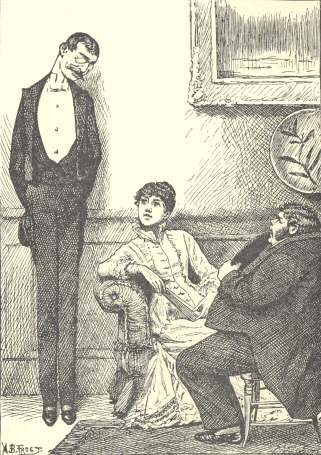
To praise J. Jones, Esquire:
I ask them what on earth they see
About him to admire?
They cry “He is so sleek and slim,
It’s quite a treat to look at him!”
Those visionary maids—
I feel a sharp and sudden poke
Between the shoulder-blades—
“Why, Brown, my boy! Your growing stout!”
(I told you he would find me out!)
“No more it is, my boy!
But if it’s yours, as I infer,
Why, Brown, I give you joy!
A man, whose business prospers so,
Is just the sort of man to know!
I’d best get out of reach:
p. 135For sucha weight as yours, I fear,
Must shortly sink the beach!”—
Insult me thus because I’m stout!
I vow I’ll go and call him out!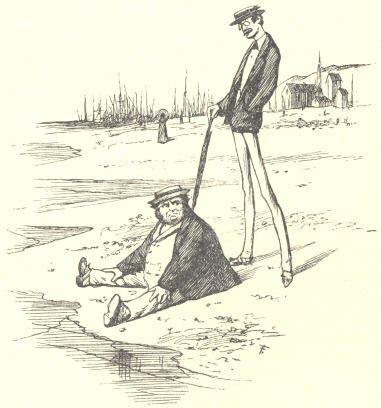
p.136ATALANTA IN CAMDEN-TOWN
In that summer of yore,
Atalanta didnot
Vote my presence a bore,
Nor reply to my tenderest talk “She had
heard all that nonsensebefore.”
And the necklace and sash on,
And her heart,as I thought,
Was alive to my passion;
And she’d done up her hair in the style that
the Empress had brought intofashion.
With my pearl of a Peri—
But, for all Icould say,
She declared she was weary,
p. 137That“the place was so crowded and hot, and
she couldn’t abide thatDundreary.”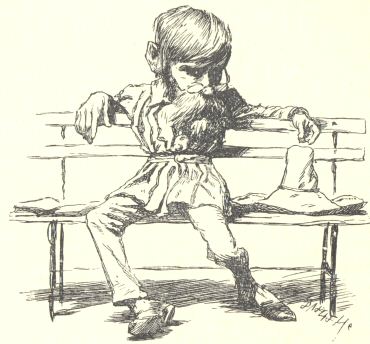
’Tis for youthat she whimpers!”
And I noted withjoy
Those sensational simpers:
And I said “This is scrumptious!”—a
phrase I had learned from theDevonshire shrimpers.
I’m a fortunate fellow,
When thebreakfast is spread,
When the topers are mellow,
When the foam of the bride-cake is white,
and the fierce orange-blossoms areyellow!”
O those eloquent eyes!
I was drunk withthe dawn
Of a splendid surmise—
I was stung by a look, I was slain by a tear,
by a tempest of sighs.
The sweet secret thou keepest.
And the yearningfor ME
That thou wistfully weepest!
And the question is ‘License or Banns?’,
though undoubtedly Banns are thecheapest.”
“And let mebe Leander!”
But I lost herreply—
Something ending with “gander”—
For the omnibus rattled so loud that no
mortal could quite understandher.p. 140THELANG COORTIN’
Wi’ her doggie at her feet;
Thorough the lattice she can spy
The passers in the street,
And tirleth at the pin:
Now speak and say, my popinjay,
If I sall let him in.”
That flew abune her head:
“Gae let him in that tirls the pin:
He cometh thee to wed.”
A woeful man was he!
p.141“And dinna ye ken your lover agen,
Sae well that loveth thee?”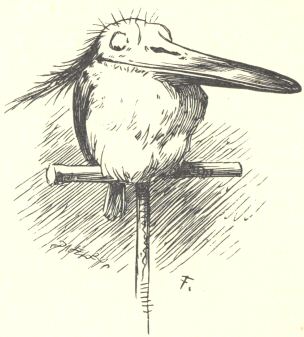
That have been sae lang away?
And how wad I ken ye loved me, Sir?
Ye never telled me sae.”
Cam’ rinnin’ doon his cheek,
“I have sent the tokens of my love
This many and many a week.
The rings o’ the gowd sae fine?
I wot that I have sent to thee
Four score, four score and nine.”
“Wow, they were flimsie things!”
Said—“that chain o’ gowd, my doggie to howd,
It is made o’ thae self-same rings.”
The locks o’ my ain black hair,
p. 143Whilk Isent by post, whilk I sent by box,
Whilk I sent by the carrier?”
“And I prithee send nae mair!”
Said—“that cushion sae red, for my doggie’shead,
It is stuffed wi’ thae locks o’hair.”
Tied wi’ a silken string,
Whilk I sent to thee frae the far countrie,
A message of love to bring?”
Wi’ its silken string and a’;
But it wasna prepaid,” said that high-born maid,
“Sae I gar’d them tak’ itawa’.”
It was written sae clerkly and well!
Now the message it brought, and the boon that it sought,
I must even say it mysel’.”
Sae wisely counselled he.
“Now say it in the proper way:
Gae doon upon thy knee!”
Went doon upon his knee:
“O Ladye, hear the waesome tale
That must be told to thee!
I coorted thee by looks;
By nods and winks, by smiles and tears,
As I had read in books.
I coorted thee by signs;
By sending game, by sending flowers,
By sending Valentines.
I have dwelt in the far countrie,
Till that thy mind should be inclined
Mair tenderly to me.
I am come frae a foreign land:
I am come to tell thee my love at last—
O Ladye, gie me thy hand!”
But she smiled a pitiful smile:
“Sic’ a coortin’ as yours, my man,” shesaid
“Takes a lang and a weary while!”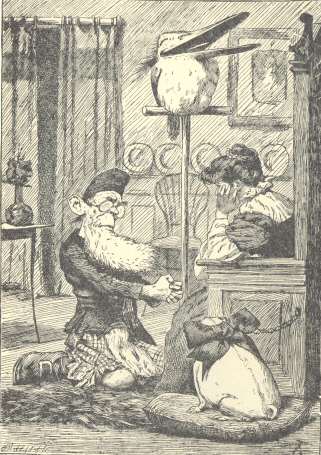
A laugh of bitter scorn:
“A coortin’ done in sic’ a way,
It ought not to be borne!”
And up and doon he ran,
And tugged and strained his chain o’ gowd,
All for to bite the man.
O hush thee, doggie dear!
There is a word I fain wad say,
It needeth he should hear!”
To drown her doggie’s bark:
Ever the lover shouted mair
To make that ladye hark:
Upraised his angry squall:
I trow the doggie’s voice that day
Was louder than them all!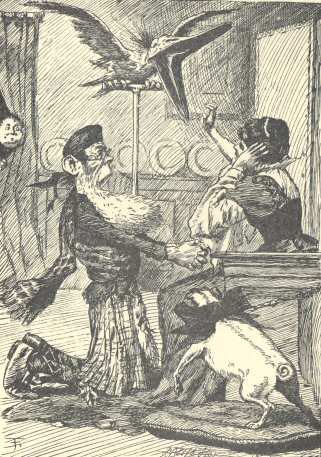
Sat by the kitchen fire:
They heard sic’ a din the parlour within
As made them much admire.
(I ween he wasna thin),
“Now wha will tae the parlour gae,
And stay this deadlie din?”
Casted their kevils in,
For wha will tae the parlour gae,
And stay that deadlie din.
To stay the fearsome noise,
“Gae in,” they cried, “whate’erbetide,
Thou prince of button-boys!”
To swinge that dog sae fat:
The doggie yowled, the doggie howled
The louder aye for that.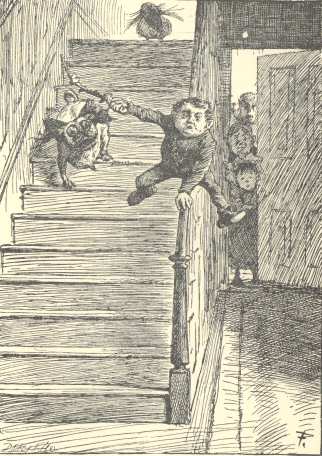
The doggie ceased his noise,
And followed doon the kitchen stair
That prince of button-boys!
Wi’ a frown upon her brow:
“O dearer to me is my sma’ doggie
Than a dozen sic’ as thou!
Nae use at all to fret:
Sin’ ye’ve bided sae well for thirty years,
Ye may bide a wee langer yet!”
And tirlëd at the pin:
Sadly went he through the door
Where sadly he cam’ in.
To fly abune my head,
To tell me what I ought to say,
I had by this been wed.
He said wi’ sighs and tears,
“I wot my coortin’ sall not be
Anither thirty years
Exactly to my taste,
I’ll pop the question, aye or nay,
In twenty years at maist.”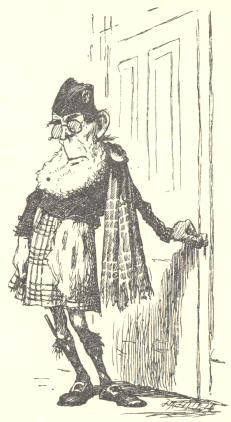
p. 152FOURRIDDLES
With a strange frenzy, and for many a day
They paced from morn to eve the crowded town,
And danced thenight away.
They pointed to a building gray and tall,
And hoarsely answered “Step inside, my lad,
And thenyou’ll see it all.”
Whose thoughts are full of indices and surds?
Bands cannot always play, nor ladies smile:
Endure with patience the distasteful fun
For just alittle while!”
We clove a pathway through a frantic throng:
The steeds, wild-plunging, filled us with affright:
The chariotswhirled along.
A living tide, half muslin and half cloth:
And here one mourned a broken wreath or fan,
Yet swalloweddown her wrath;
(His words half-drowned amid those thunderstuneful)
p. 155Somefrozen viand (there were many there),
A tooth-ache ineach spoonful.
Will not endure to dance without cessation;
And every one must reach the point at length
Of absoluteprostration.
To partners who would urge them over-much,
A flat and yet decided negative—
Photographerslove such.
And fading eyes grow bright, and pulses quicken:
Incessant pop the corks, and busy knives
Dispense thetongue and chicken.
And all is tangled talk and mazy motion—
Much like a waving field of golden grain,
Or a tempestuousocean.
For peaceful sleep and meditative snores,
To ceaseless din and mindless merriment
And waste ofshoes and floors.
That dreads the dances, and that shuns thesalads,
They doom to pass in solitude the hours,
Writingacrostic-ballads.
That should have warned us with its double knock?
p. 157Thetwilight wanes, and morning comes at last—
“Oh,Uncle, what’s o’clock?”
It maymean much, but how is one to know?
He opens his mouth—yet out of it, methinks,
No words ofwisdom flow.II
This wreath with all too slender skill.
Forgive my Muse each halting line,
And for the deed accept the will!
Parting, like Death’s cold river, souls thatlove?
p. 158Is nothe bound to thee, as thou to him,
By vows, unwhispered here, yet heard above?
Lives in his eye, and trembles in his tone:
And these wild words of fury but proclaim
A heart that beats for thee, for thee alone!
Like sweet bells jangled, piteous sight to see!
“Doubt that the stars are fire,” so runs his moan,
“Doubt Truth herself, but not my love forthee!”
Shaming his hoary locks with treacherous wile!
p. 159And dostthou now doubt Truth to be a liar?
And wilt thou die, that hast forgot to smile?
And the faint fragrance of thy scattered flowers:
In holy silence wait the appointed days,
And weep away the leaden-footed hours.III.
And rich with laughter and with singing:
Young hearts beat high in ecstasy,
And banners wave, and bells are ringing:
But silence falls with fading day,
And there’s an end to mirth and play.
Ah,well-a-day
The kettle sings, the firelight dances.
Deep be it quaffed, the magic draught
That fills the soul with golden fancies!
For Youth and Pleasance will not stay,
And ye are withered, worn, and gray.
Ah,well-a-day!
For human passion madly yearning!
O weary air of dumb despair,
From marble won, to marble turning!
“Leave us not thus!” we fondly pray.
“We cannot let thee pass away!”
Ah,well-a-day!IV.
More plural is my Second:
My Third is far the pluralest—
So plural-plural, I protest
It scarcely can be reckoned!
My Second by believers
In magic art: my simple Third
Follows, too often, hopes absurd
And plausible deceivers.
A failure melancholy!
My Second men revered as wise:
My Third from heights of wisdom flies
To depths of frantic folly.
My Second’s age is ended:
My Third enjoys an age, they say,
That never seems to fade away,
Through centuries extended.
To paint her myriad phases:
The monarch, and the slave, of men—
A mountain-summit, and a den
Of dark and deadlymazes—
Beginning, end, and middle
Of all that human art hath made
Or wit devised! Go, seek heraid,
If you would read my riddle!p.163FAME’S PENNY-TRUMPET
Ye little men of little souls!
And bid them huddle at your back—
Gold-sucking leeches, shoals on shoals!
“Reward us, ere we think or write!
Without your Gold mere Knowledge fails
To sate the swinish appetite!”
Or Newton paused with wistful eye,
Rush to the chace with hoofs unclean
And Babel-clamour of the sty
We will not rob them of their due,
Nor vex the ghosts of other days
By naming them along with you.
They toiled not for reward nor thanks:
Their cheeks are hot with honest shame
For you, the modern mountebanks!
That Love and Mercy should abound—
While marking with complacent ears
The moaning of some tortured hound:
Lest Wisdom turn on you in wrath,
Trampling, with heel that will not spare,
The vermin that beset her path!
Ye idols of a petty clique:
Strut your brief hour in borrowed plumes,
And make your penny-trumpets squeak.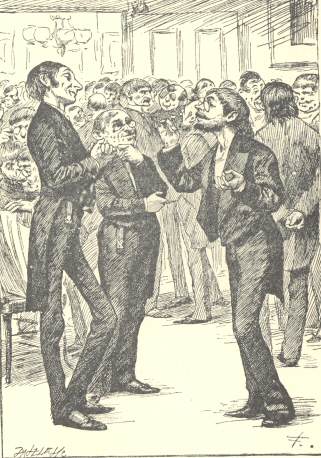
Of learning from a nobler time,
And oil each other’s little heads
With mutual Flattery’s golden slime:
And stand in Glory’s ether clear,
And grasp the prize of all your pain—
So many hundred pounds a year—
Sing Pæans for a victory won!
Ye tapers, that would light the world,
And cast a shadow on the Sun—
One crystal flood, from East to West,
When yehave burned your little time
And feebly flickered into rest!
- Recently published
-
- The Project Gutenberg eBook of Master and Man, by Leo Tolstoy
- Trinity Site, by The U.s. Department of Energy
- Franz Josef Haydn's One Hundred Fourth Symphony, in D
- Trinity Site, by The U.s. Department of Energy
- The Sportsman, by Xenophon
- Trinity Site, by The U.s. Department of Energy
- The Augsburg Confession
- The Augsburg Confession
- The Cavalier Songs and Ballads of England, by Various
- The Augsburg Confession
- Random reads
-
- A House of Pomegranates, by Oscar Wilde
- Trinity Site, by The U.s. Department of Energy
- The Augsburg Confession
- Trinity Site, by The U.s. Department of Energy
- The Amateur, by Richard Harding Davis
- Trinity Site, by The U.s. Department of Energy
- Trinity Site, by The U.s. Department of Energy
- Trinity Site, by The U.s. Department of Energy
- The Light of Western Stars
- Trinity Site, by The U.s. Department of Energy
- Franz Josef Haydn's One Hundred Fourth Symphony, in D
- Franz Josef Haydn's One Hundred Fourth Symphony, in D
- The Project Gutenberg eBook of Rose O’ The River, by Kate Douglas Wiggin.
- Franz Josef Haydn's One Hundred Fourth Symphony, in D
- The Augsburg Confession
- The Augsburg Confession
- The Project Gutenberg eBook of In a German Pension, by Katherine Mansfield
- The Augsburg Confession
- Franz Josef Haydn's One Hundred Fourth Symphony, in D
- Franz Josef Haydn's One Hundred Fourth Symphony, in D
- Search
-
- Friendly links
-
- wooden dollhouses under 20 dollars
- snowman kits for 13 year olds under 100 dollars
- adventure playsets for 7 year olds under 30 dollars
- best pretend play capes for the whole family
- best dress up accessories for 2 year olds under 20 dollars
- best toy tool sets for 4 year olds under 20 dollars
- hand puppets for 6 months under 100 dollars
- gift kids trampolines for 5 year olds
- best interactive globes for 8 year olds under 50 dollars
- best robot kits for 4 year olds under 10 dollars
- The Hunting of The Snark
- The Mayflower Compact
- Alice’s Adventures in Wonderland
- Give Me Liberty Or Give Me Death
- Lincoln’s Second Inaugural Address, March 4, 1865.
- Lincoln’s First Inaugural Address
- The Declaration of Independence of the United States of America
- Through the Looking
- The United States Bill of Rights
- John F. Kennedy's Inaugural Address